

If you have ever sent a quick “thanks” and gotten back “yww” instead of the usual “yw,” you have probably paused for a second. Is it a typo? A new slang term? Something more personal? You are not alone. Searches for this exact phrase have climbed steadily through 2026 as more people run into it in group chats, comment sections, and DMs and have no idea how to respond.
This guide breaks down exactly what YWW means, where it came from, how it differs across platforms and age groups, and the small details most other guides skip entirely.
What Does YWW Mean in Text?
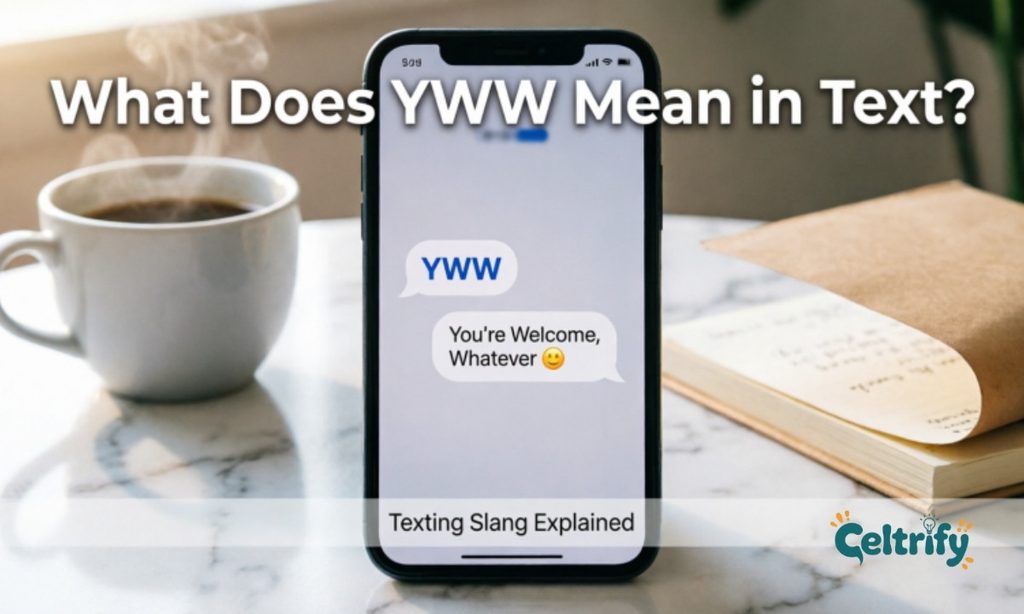
YWW most commonly stands for “You’re Welcome” or “You’re Very Welcome” in texting and social media. It is a warmer, more enthusiastic reply to a thank you than the plain “yw,” created by adding an extra W for emphasis. In rare cases, especially after a disagreement, it can also mean “you were warned.”
That second meaning matters far less often than people assume, but it is real, and later sections explain exactly how to tell the two apart in seconds.
Why People Are Suddenly Searching for YWW in 2026
Texting slang moves in waves. A term sits quietly for years, then a few viral TikTok and Instagram Reels clips push it into wider use, and suddenly it shows up in chats where it never appeared before. That is roughly what happened with YWW.
A few things pushed it into the mainstream this year:
- Short-form video creators started replying to comments with “yww” instead of “np” or “yw,” and viewers picked it up.
- Predictive keyboards on many phones now suggest the doubled letter automatically once you type “yw,” which normalized the longer version.
- Group chats among younger users increasingly reward warmth and personality over plain, flat replies, so small additions like an extra letter carry real social meaning.
None of this means YWW is brand new. It has floated around casual texting for years. What changed in 2026 is how often it shows up outside close friend groups, which is exactly why so many people are searching for a clear explanation.
See Also : HML Meaning in Text
The Core Meaning: You’re Welcome, Just Warmer
Think about the difference between saying “thanks” and saying “thank you so much.” Both express gratitude, but one clearly carries more feeling. The relationship between “yw” and “yww” works the same way.
When someone types:
- yw it reads as a quick, almost automatic acknowledgment.
- yww it reads as a friendlier, more genuine response, closer to “you’re very welcome” or “of course, happy to help.”
That extra W is not a keyboard slip. It is a small, deliberate choice people make to soften a reply and make it feel less robotic.
Common Ways People Expand YWW
Different people mentally expand the letters differently, though they all land in roughly the same emotional space.
| Expansion | Meaning | Typical Tone |
| You’re Welcome (extra emphasis) | Standard grateful reply | Friendly, casual |
| You’re Very Welcome | Slightly more enthusiastic reply | Warm, genuine |
| You’re Welcome Wholeheartedly | Playful, exaggerated version | Cheerful, sometimes joking |
| You Were Warned | Told you so, after ignored advice | Teasing, sarcastic |
There is no single dictionary entry everyone agrees on because, like most internet slang, YWW grew organically through everyday texting rather than being coined by one person or brand.
YWW Meaning by Context: How to Tell Them Apart
Context decides everything with a term like this. Here is a simple way to read the room before you reply.
- If a friend just did you a favor and said “thanks,” and you get “yww” back, it almost always means you’re welcome.
- If it follows an argument, a prediction, or an “I told you so” moment, it likely leans toward you were warned.
- If it shows up right after someone ignored your advice and something went wrong, treat it as a teasing callback, not gratitude.
A quick rule that works most of the time: gratitude conversations produce gratitude replies, and conflict or prediction conversations produce the warning version. The words around YWW almost always settle the question.
Where YWW Shows Up Most
Not every platform uses this term the same way. Here is how it tends to break down across the apps people use most in 2026.
| Platform | How Common It Is | Typical Use |
| TikTok comments and DMs | Very common | Replying to thanks quickly and warmly |
| Snapchat | Very common | Fast, casual back and forth chats |
| Instagram DMs | Common | Friendlier than public comment replies |
| Situational | Normal among close friends, less so in family or work groups | |
| Gaming chat (Discord, in-game text) | Common | Quick acknowledgment during matches |
| Text messages (SMS) | Moderate | Mostly between friends who already text casually |
| Professional email or work chat | Rare, and discouraged | Reads as unpolished or overly casual |
Real Examples of YWW in Conversation
Seeing it in context makes the meaning click faster than any definition.
- “hey thanks for covering my shift” “yww, anytime”
- “omg thank you so much for the notes” “yww 😊”
- “told you that shortcut would take longer” “yww, next time listen lol”
- “appreciate you helping me move this weekend” “yww fr, that’s what friends are for”
Notice the tone shift in the third example. The words around “yww” make it obvious this is the teasing version, not a grateful one.
How to Reply When Someone Sends You YWW
Since YWW is already a reply to your thank you, you usually do not need to respond again. But if the conversation continues, a few natural options work well:
- A simple emoji like 😊 or 🙏 to close the exchange warmly.
- “means a lot” or “you’re the best” if you want to keep the warmth going.
- A quick follow up question if there is more to discuss.
If it was the “you were warned” version, a light “okay fair” or a laughing emoji usually closes the loop without escalating anything.
YWW vs YW: What Actually Changes
People often ask whether there is a real difference or if it is just a typing habit. There is a real, if subtle, difference.
| Term | Feel | When People Use It |
| YW | Neutral, quick, almost automatic | Fast exchanges, less emotional weight |
| YWW | Warmer, slightly more expressive | When the sender wants the reply to feel genuine |
Neither is wrong. Choosing between them is closer to choosing between “okay” and “sounds good” than choosing between two completely different words.
The Less Common Meanings of YWW
Beyond the two main uses already covered, a few other meanings occasionally show up, though they are far less frequent.
- You Were Wrong – a playful way to point out a mistake during a casual disagreement.
- Yeah Whatever Works – a relaxed, agreeable response, though this usage is uncommon.
- You’re Welcome, World – an internet culture spin sometimes used in captions or jokes after sharing something helpful publicly.
- Outside slang entirely, YWW is also used as an airport code and appears in a handful of organization names, though these have nothing to do with texting.
None of these require memorizing. If a conversation is friendly and someone just said thanks, gratitude is almost always the answer.
Read Now : GYG Meaning in Text
What Most Guides Get Wrong About YWW
A lot of existing explanations treat YWW like it has one fixed, universal meaning. Real texting does not work that way. A few things worth knowing that often get left out:
- The extra W is frequently reinforced by predictive text and autocorrect suggestions in 2026, which means its spread is now partly driven by keyboard software, not just human habit.
- Gen Alpha texters, now old enough to have their own phones and group chats, tend to stack even more letters for emphasis, so seeing “ywww” or “yw!!” alongside “yww” is increasingly normal rather than a mistake.
- Voice-to-text and swipe typing occasionally produce a doubled letter by accident, so context still matters even when the term looks intentional.
- Using YWW after someone shares something emotionally heavy, rather than a simple favor, tends to read as dismissive. A short, sincere reply works better in those moments.
Should You Use YWW Yourself?
Whether YWW fits your own texting style depends on who you are talking to and where.
Good situations to use it:
- Replying to a friend or classmate who thanked you for something small
- Casual chats on TikTok, Snapchat, or Instagram
- Gaming chats where quick, friendly replies keep the mood light
Situations to avoid it:
- Professional emails or workplace messaging tools
- Conversations with people who are not familiar with texting slang
- Formal thank you exchanges, such as after a job interview or business favor
In professional or formal settings, writing out “You’re welcome” in full still reads as more polished and avoids any confusion.
Quick Reference Summary
| Question | Short Answer |
| What does YWW mean? | Usually “You’re Welcome” or “You’re Very Welcome,” said warmly |
| Is it always positive? | Mostly yes, though it can mean “you were warned” in teasing contexts |
| Where is it most common? | TikTok, Snapchat, Instagram DMs, and gaming chats |
| Is it appropriate for work? | No, stick to full phrases in professional settings |
| How is it different from YW? | YWW carries more warmth and enthusiasm than the flat, quick YW |
Frequently Asked Questions
What does YWW mean in a text message?
YWW usually means “You’re Welcome” or “You’re Very Welcome.” It is a warmer version of the standard “yw” reply, used after someone says thank you.
Is YWW always about being polite?
Not always. While gratitude is the most common meaning, YWW can occasionally mean “you were warned” when it follows a disagreement or a prediction that turned out to be true.
Does YWW mean someone likes you romantically?
Not on its own. When someone sends “yww” after you thank them, it almost always reflects friendliness rather than romantic interest. Tone and the rest of the conversation matter far more than this single term.
Is it okay to use YWW in a work chat?
It is best avoided in professional settings. Writing out “You’re welcome” in full reads as more polished and reduces the chance of confusion with coworkers unfamiliar with texting slang.
What is the difference between YW and YWW?
YW is a quick, neutral acknowledgment. YWW carries extra warmth and enthusiasm, similar to the difference between saying “thanks” and “thank you so much.”
Where did YWW come from?
Its exact origin is hard to trace, like most internet slang. It grew naturally out of texting culture, following the same pattern as earlier abbreviations like “lol” and “brb,” and gained wider use in 2026 partly through short-form video platforms and predictive text suggestions.
Final Thoughts
YWW is a small piece of texting slang with an easy meaning once you know the context. In almost every case, it is simply a warmer version of “you’re welcome,” and the rare “you were warned” reading only applies after a disagreement or a missed prediction.
Read the message before it, match the tone, and you will never be confused by those three letters again.

John David is a Passionate content creator and digital publisher behind Celtrify.com, dedicated to sharing helpful insights, trending topics, and quality online resources. Focused on delivering engaging, informative, and user-friendly content for readers worldwide.
