

If you have ever opened a group chat and seen someone reply with just “ionk,” you probably paused for a second. It looks like a typo. It is not. IONK is one of those small texting shortcuts that spreads fast online but rarely gets explained clearly. This guide breaks down exactly what IONK means, where it came from, how people actually use it in 2026, and when you should avoid it altogether.
IONK Meaning in Text: Quick Definition
IONK stands for “I don’t know.” It is a casual, phonetic way of texting the phrase, meant to sound like how people actually say it out loud when talking fast. Most people use it the same way they would use IDK, just with a slightly more playful or laid back tone.
That single line answers the core question. But there is more nuance worth knowing, especially since a smaller group of people use IONK to mean something completely different.
What Does IONK Stand For
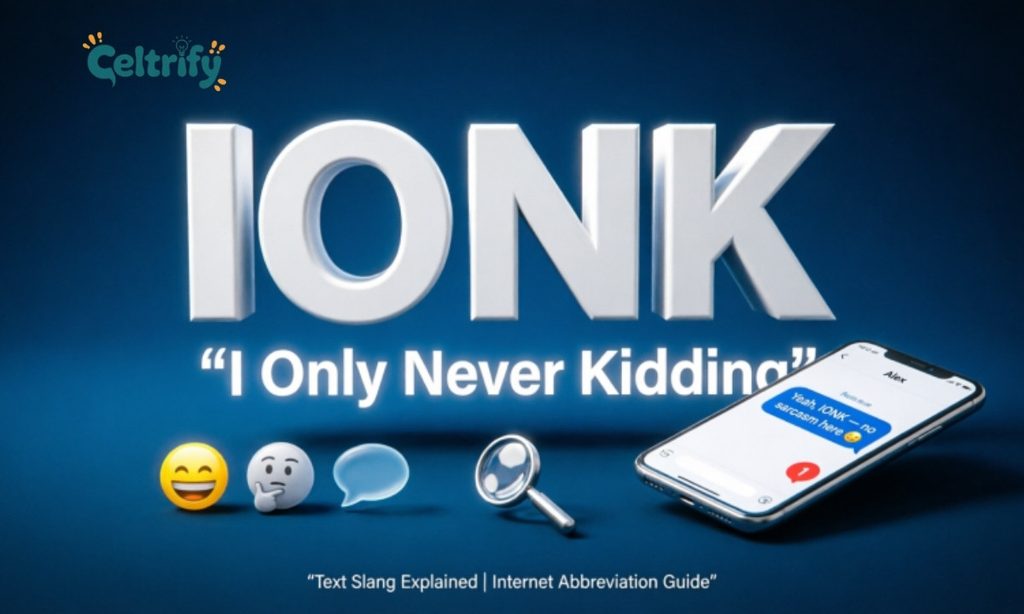
IONK is a texting abbreviation built to sound like the words “I don’t know” said quickly and casually, almost blended together, like “I-onno” or “I-onk.” It is not an official acronym with a fixed committee definition. It is internet slang that grew out of how people naturally speak, then got typed the way it sounds rather than the way it is spelled.
You will most often see it written in lowercase, without punctuation, such as:
- ionk
- ionk lol
- ionk tbh
This lowercase, no-caps style is common across casual chat slang in general, not just IONK. It signals that the message is relaxed and informal rather than a serious statement.
Read Now : PK Meaning in Text
Where IONK Came From
IONK did not come from a single event, celebrity, or viral post. It grew the same way most texting slang grows: through repetition on messaging apps and social platforms.
Here is the general pattern behind its rise:
- “I don’t know” became “IDK” as SMS texting took off and character limits mattered.
- As typing on phones got faster and voice-to-text became normal, people started spelling words the way they sound rather than the way dictionaries spell them.
- Platforms like Snapchat, TikTok, and Instagram rewarded short, catchy replies, so phonetic versions like IONK picked up steam.
- Group chats and comment sections repeated it enough that it became recognizable slang instead of a random string of letters.
IONK is closely related to IDK, but it carries a slightly different feel. Where IDK reads as neutral and almost formal by internet standards, IONK reads as more relaxed, a little cheeky, and more conversational.
How People Use IONK in Real Conversations
Context matters more than the letters themselves. Here are realistic examples of IONK in action.
Texting between friends
Friend 1: “Where’s everyone meeting tonight?” Friend 2: “ionk, check the group chat”
Coworker chat
Coworker 1: “Did they move our meeting to Friday?” Coworker 2: “ionk, I’ll ask HR”
Social media comments
Someone posts a confusing meme, and a comment underneath just says “ionk why this is so accurate.”
Gaming or Discord chat
Teammate: “Is the update live yet?” Player: “ionk, patch notes haven’t dropped”
In every case, the reply signals the same basic idea: the person does not have the answer, and they are keeping the response short instead of writing out a full sentence.
IONK vs IDK and Similar Slang
People often ask how IONK compares to older, more familiar abbreviations. Here is a simple side by side breakdown.
| Term | Full Meaning | Tone | Where It’s Common |
| IDK | I don’t know | Neutral, widely understood | Texting, email, all age groups |
| IONK | I don’t know | Playful, casual, phonetic | TikTok, Snapchat, Instagram, group chats |
| IUNNO | I don’t know | Very casual, sound based spelling | Casual texting among younger users |
| Dunno | I don’t know | Informal, more common in speech | Texting and spoken conversation |
| Ion | I don’t | Shortened, context dependent | Southern slang and casual texting |
The main takeaway is that IONK and IDK mean the same thing. The difference is tone and audience. IDK is understood by nearly everyone, including older generations and people outside internet culture. IONK is more of a younger, trend driven variation that carries a bit more personality.
The Two Meanings People Confuse
This is where a lot of guides on this topic leave out an important detail. While the overwhelming majority of usage points to “I don’t know,” a smaller number of people, especially in specific chat communities, use IONK to mean “I only now know.” This second version is used to express a sudden realization, similar to saying “oh, now I get it” or “I just found out.”
Example of the “I only now know” usage:
Person A: “The deadline got pushed to Monday.” Person B: “ionk, thanks for telling me.”
In this exchange, “ionk” reads more like “oh, I only just found that out” than “I have no idea.” This version is far less common than the “I don’t know” meaning, but it does exist, and it can cause genuine confusion if you assume the wrong one.
How to tell which meaning is intended:
- If the reply follows a question, it almost always means “I don’t know.”
- If the reply follows new information being shared, it may mean “I only now know.”
- If the sentence still makes sense as “I don’t know,” go with that meaning first, since it is far more common.
Read Meaning : “Fit” Meaning in Text
When You Should Use IONK
IONK fits naturally into casual, low stakes conversations. It works well when:
- You are texting friends or close coworkers in an informal setting
- You are replying to a comment or caption on social media
- You want to keep a conversation light instead of overly serious
- Speed matters more than sounding polished
When You Should Avoid IONK

There are situations where IONK can backfire or simply confuse the other person. Skip it when:
- You are writing a formal email or professional message
- You are talking to someone unfamiliar with internet slang, such as older relatives or new coworkers
- Clarity is more important than sounding casual, such as during a work deadline discussion
- You are unsure whether the other person will recognize the term at all
If there is any doubt, writing “I don’t know” in full is always the safer choice.
IONK in 2026: What Has Changed
Slang usage shifts every year, and IONK is no exception. A few things stand out in how it is being used now compared to a couple of years ago:
- IONK has moved beyond just texting and Snapchat. It now shows up regularly in TikTok captions, Instagram comment threads, and Discord servers tied to gaming communities.
- It is increasingly paired with emojis or reaction gifs rather than standing alone, which softens the tone even further.
- Search interest around “IONK meaning” has grown as more people outside Gen Z encounter the term secondhand, often from younger family members or coworkers.
- The dual meaning issue, “I don’t know” versus “I only now know,” has become slightly more visible as the term spreads into new communities that interpret it differently based on regional or platform habits.
- IONK remains informal only. It has not crossed into professional or academic use, and there is no sign that it will, since brands and formal writing still favor the fully spelled out phrase or the more universally recognized IDK.
None of this changes the core meaning. It simply confirms that IONK is settling into everyday internet language rather than fading out.
Frequently Asked Questions
What does IONK mean in a text message?
IONK almost always means “I don’t know.” It is a casual, phonetic abbreviation used to reply quickly when someone does not have an answer.
Is IONK the same as IDK?
Yes, in most cases they mean the exact same thing. The difference is tone. IONK feels more playful and trend driven, while IDK feels more neutral and widely recognized across all age groups.
Does IONK ever mean something other than I don’t know?
Occasionally. A smaller group of users use IONK to mean “I only now know,” which expresses a sudden realization rather than uncertainty. Context clues, like whether the message follows a question or new information, help clarify which meaning is intended.
Is it okay to use IONK in a work chat?
It depends on the workplace. In relaxed, informal team chats it may be fine among close coworkers. In formal emails, client communication, or conversations with people you do not know well, it is safer to write out “I don’t know.”
Where did IONK come from?
IONK developed from the natural evolution of texting shortcuts, following the same path as IDK, but spelled to match how the phrase actually sounds when spoken quickly. It gained traction through platforms like Snapchat, TikTok, and Instagram.
Who uses IONK the most?
It is most common among Gen Z and younger internet users, though it has been spreading into broader online communities as slang terms typically do once they gain enough visibility.
Final Takeaway
IONK is a simple, casual way to say “I don’t know,” built for fast texting and social media replies. In rare cases, it can mean “I only now know,” so context is worth a quick check if the message feels off.
Use it freely in relaxed conversations with people who will understand it, and stick to the full phrase whenever clarity or professionalism matters more than speed.

John David is a Passionate content creator and digital publisher behind Celtrify.com, dedicated to sharing helpful insights, trending topics, and quality online resources. Focused on delivering engaging, informative, and user-friendly content for readers worldwide.
