

You are scrolling through a group chat and someone drops a link with just four letters attached: NSFW. No explanation, no context, just a warning label sitting there before you tap.
Most people have a rough idea of what it means, but the details get fuzzy fast. Does it only apply to explicit images? Can you use it for gross content too? Is it rude to send something NSFW without asking first? This guide answers all of that, plus how the label is actually being used across texting, Snapchat, TikTok, Instagram, and workplace chats in 2026.
What Does NSFW Mean? (Quick Answer)
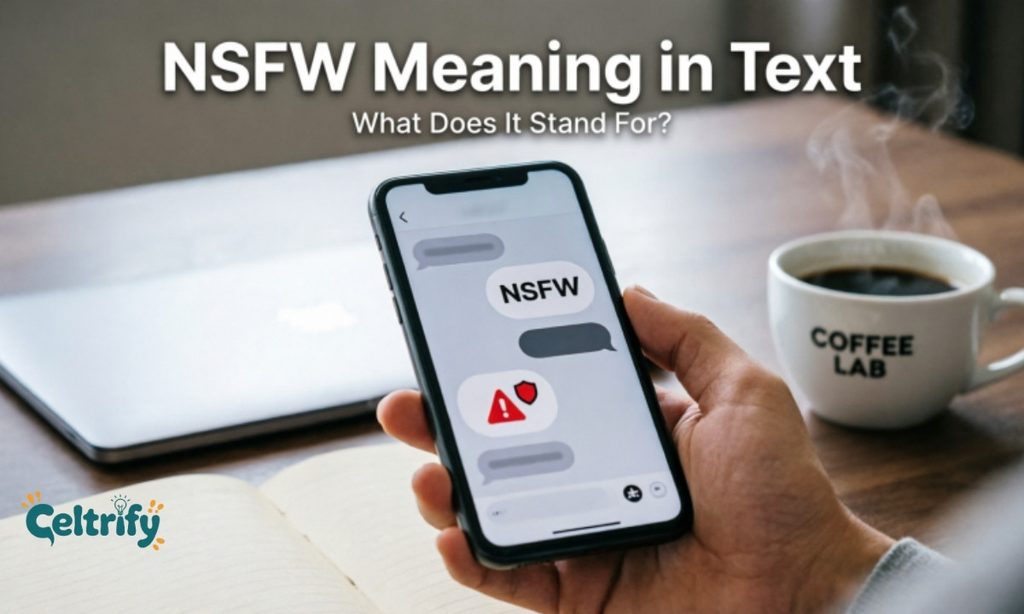
NSFW stands for “Not Safe For Work.” It is a warning label placed before a link, image, video, or message to tell the recipient that the content is explicit, graphic, or otherwise inappropriate to open in a professional, public, or family setting. The label does not always mean sexual content. It can also flag violence, disturbing imagery, or strong language.
Where NSFW Came From
NSFW started on early internet forums in the mid-2000s, back when message boards and image forums like early Reddit and 4chan were some of the only places people shared links casually online. Office workers browsing these sites during work hours needed a fast way to know if a link was safe to click on a monitor other coworkers could see.
The tag caught on because it solved a real problem. Someone could post a link, tag it NSFW, and everyone scrolling past would know to wait until they were home or on private Wi-Fi before opening it. It was never an official rule written by any single platform. It grew organically as shared etiquette, and that is part of why it has lasted so long while other early internet abbreviations faded out.
By the late 2010s, platforms like Reddit and Tumblr had folded NSFW into their actual content systems, turning a piece of community slang into a functional moderation tag.
Read This : IDM Meaning in Text
What NSFW Actually Covers
A common mistake is assuming NSFW only means sexual content. In practice, the label is broader. Here is what typically falls under it:
- Explicit or sexual imagery and text – nudity, sexual scenes, or suggestive content
- Graphic violence – injury, gore, or disturbing real-world footage
- Strong language or profanity – content with heavy swearing that would be awkward in a professional setting
- Disturbing or unsettling material – content that is not sexual but still uncomfortable to view around others
- Sensitive real-life topics – posts discussing trauma, abuse, or graphic personal stories, even without images
If content would make you close your laptop quickly when a coworker walks by, it probably qualifies.
NSFW vs SFW: What’s the Difference
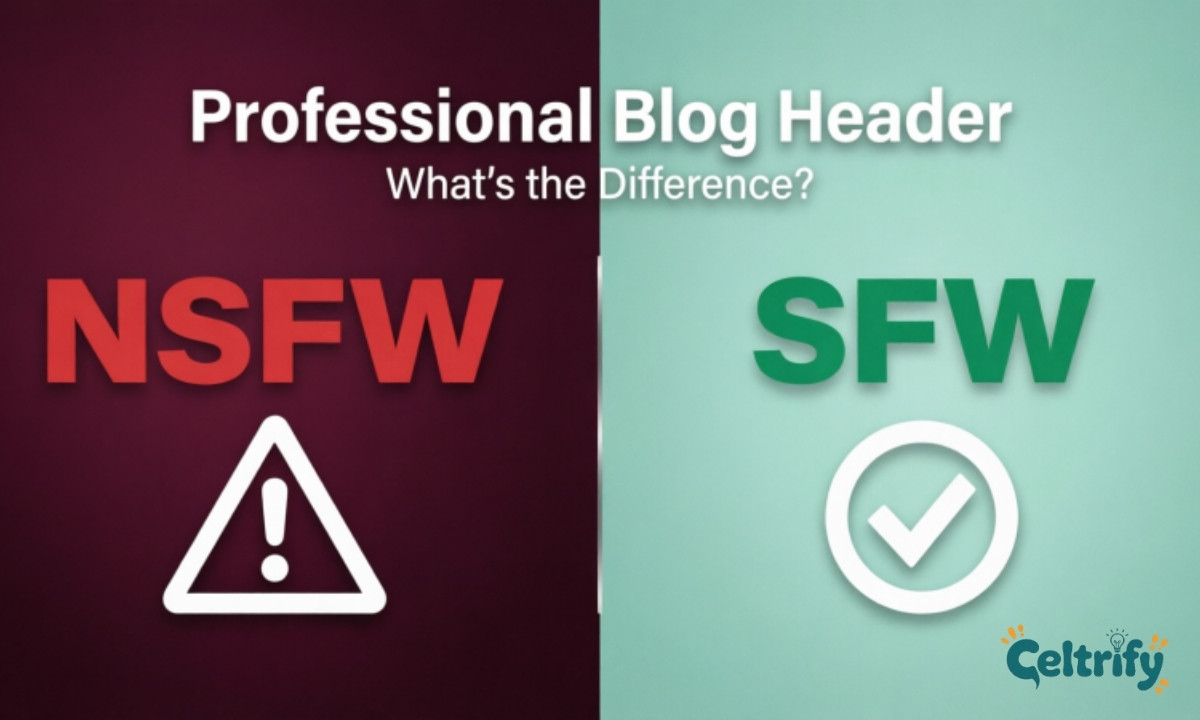
| Term | Meaning | When to Use |
| NSFW | Not Safe For Work, content that is explicit, graphic, or sensitive | Before sharing anything that needs a warning |
| SFW | Safe For Work, content that is fine for any audience | To reassure someone the content is normal to open anywhere |
| NSFL | Not Safe For Life, content disturbing beyond typical NSFW | For extremely graphic or traumatic material, rarely used casually |
SFW is essentially the opposite tag, used to confirm that a link or image is completely fine to open anywhere, including at a work desk or in a family group chat.
How NSFW Is Used Across Platforms in 2026
Every platform has slightly different norms around the tag. Here is how it plays out in practice.
Texting and group chats
In casual texting, NSFW usually appears in parentheses or right before a link, acting as a heads up rather than a formal rule. A typical exchange looks like this:
Friend: “Sending you a meme, NSFW btw” You: “Noted, opening it later”
It is treated as basic chat etiquette. Sending explicit content without the label, especially to someone who has not agreed to receive it, is generally seen as inconsiderate.
Snapchat
On Snapchat, NSFW often appears in story captions or gets said before sending a private snap. Because Snapchat content disappears, people use the label as a courtesy heads up rather than a strict content filter, letting the recipient decide whether to open it immediately or wait until they are somewhere private.
TikTok
TikTok rarely uses the literal acronym in captions because the platform has its own automated systems for flagging mature content. When creators do write NSFW, it is usually attached to edgy jokes, dark humor, or content that skirts community guidelines without fully breaking them.
Instagram and X
On Instagram, NSFW shows up in captions on meme pages and fan accounts, often paired with a sensitive content warning screen the platform applies automatically. On X, the platform has built out a full sensitivity tier system, so a hashtag or caption tag is now backed by an actual account level setting that applies the warning screen automatically.
Reddit is the platform where NSFW carries the most weight. Entire subreddits are tagged NSFW at the community level, and individual posts within otherwise safe subreddits can be flagged the same way. Reddit treats this as a functional content filter, not just a courtesy label, and mislabeling content can result in a post being removed.
Workplace chat tools
In Slack, Teams, or email, NSFW is used sparingly and usually as a joke warning before someone shares an off-color meme with a trusted coworker. It signals awareness that the content is not something to open on a shared screen or during a meeting.
Read Now : Dolo Meaning
What’s New in 2026: NSFW Meets AI Content Labels
The biggest shift this year is not in what NSFW means, it is in what now sits next to it. Through 2026, major platforms have rolled out mandatory AI content disclosure labels that run parallel to the older NSFW warning system rather than replacing it.
Here is what changed:
- Dual labeling on X. Since February 2026, any AI-generated adult content posted on X must carry both a sensitivity tier label and a separate AI content disclosure label. A caption reading NSFW is no longer enough on its own if the content was AI-generated.
- TikTok’s graduated penalty system. TikTok now runs a four-level enforcement ladder for undisclosed AI content, starting with a warning and retroactive labeling and escalating up to a permanent ban. This applies whether or not the content is also NSFW, but the two labels increasingly overlap on mature AI-generated posts.
- YouTube’s more visible placement. Starting in May 2026, YouTube moved AI disclosure labels out of the buried description box and onto a more prominent spot directly below the video player, similar to how sensitive content warnings already worked.
- Meta’s graded synthetic content test. Meta now judges labeling requirements based on how much of an image or video is AI-generated and how realistic it looks, rather than a simple yes or no on AI use.
The practical takeaway for anyone texting or posting in 2026: if content is both explicit and AI-generated, one label is not enough anymore. Expect to see NSFW paired with a second, separate AI disclosure tag on most major platforms, and expect stricter consequences for skipping either one.
Why does this matter for regular texting?
Even outside of formal platform rules, this shift is trickling into casual chat habits. People are increasingly specifying “NSFW, AI generated” when sharing content in group chats, partly out of habit from scrolling platforms that now require it, and partly because recipients have started asking.
How to Use NSFW Correctly
Using the label well is mostly about timing and consent.
- Warn before sending, not after. Tag the content NSFW in the same message, not as a follow-up once someone has already opened it.
- Check the setting. Do not send NSFW content to work chats, family groups, or anyone who has not agreed to receive that kind of material.
- Do not assume consent from silence. If someone has not confirmed they are okay with explicit content, treat that as a no.
- Label AI-generated content separately if it applies. Simply noting NSFW is no longer the full picture if the image or video was AI-generated; say so.
- Use it even for non-sexual content. Graphic violence, disturbing news clips, and heavy profanity all deserve the same warning.
Common Examples of NSFW in Real Conversations
| Message | Meaning |
| “Check this out, NSFW” | The link contains explicit or mature content, view privately |
| “NSFW warning, this video is graphic” | The content shows violence or disturbing footage, not necessarily sexual |
| “lol this show is so NSFW” | Used loosely to describe a show with mature themes or humor |
| “NSFW, don’t open at work” | A direct instruction not to view the content in a professional setting |
| “That post should’ve been tagged NSFW” | Criticism that someone shared mature content without a warning |
Frequently Asked Questions
What does NSFW mean in a text message?
NSFW means “Not Safe For Work.” In a text, it is a warning that the content being shared, whether a link, photo, video, or description, contains material that would be inappropriate to open in front of coworkers, family, or in public.
Does NSFW always mean sexual content?
No. NSFW covers sexual and explicit content, but it also applies to graphic violence, disturbing imagery, strong profanity, and sensitive topics like trauma or abuse. Context determines which category applies.
Is it rude to send NSFW content without warning?
Yes, most online etiquette treats this as inconsiderate. The whole purpose of the tag is consent and courtesy, letting the recipient choose when and where to view the content rather than being caught off guard.
What is the opposite of NSFW?
SFW, which stands for “Safe For Work,” is the opposite tag. It confirms that content is appropriate for any audience and any setting.
Is NSFW still used in 2026 or has it been replaced?
NSFW is still widely used across texting, Snapchat, Instagram, and Reddit in 2026. Platforms have added extra layers, particularly separate AI content disclosure labels, but the core NSFW warning has not disappeared and remains the most recognized shorthand for mature content online.
Can NSFW be used jokingly?
Yes. Especially among younger users, NSFW sometimes gets attached to something completely harmless for comedic effect, playing off the seriousness of the label. Context and tone in the conversation usually make it obvious when this is happening.
What does NSFL mean compared to NSFW?
NSFL stands for “Not Safe For Life” and is used for content considered more disturbing or traumatic than typical NSFW material. It is far less common and generally reserved for genuinely graphic or upsetting content rather than casual mature humor.
Final Takeaway
NSFW has stayed relevant for two decades because it solves a simple, ongoing problem: warning people before they open something they might not want to see in the wrong setting. The core meaning has not changed since its forum origins, but the way it is enforced has grown more structured, especially now that AI-generated content needs its own separate disclosure alongside it.
The safest habit going forward is simple. Tag mature content clearly, check that the person on the other end actually wants it, and if AI generated the content, say that too.

John David is a Passionate content creator and digital publisher behind Celtrify.com, dedicated to sharing helpful insights, trending topics, and quality online resources. Focused on delivering engaging, informative, and user-friendly content for readers worldwide.
