


If you have scrolled through TikTok comments, Discord servers, or a group chat lately, chances are you have seen someone type “KMS” after something embarrassing happened. Maybe a friend sent it after tripping in front of their crush, or a gamer typed it after losing a match they should have won. You paused for a second and thought, wait, what does that actually mean?
You are not alone. “KMS” is one of the most searched slang terms of the year, and for good reason. It looks like it could mean something serious, but in most everyday texting, it is used very differently than its literal definition suggests. This guide breaks down exactly what KMS means, how people actually use it in 2026, when it is harmless, and when it might signal something you should not ignore.
What Does KMS Mean? (Quick Answer)

KMS stands for “kill myself.” In everyday texting and social media, it is almost always used as an exaggerated, joking reaction to embarrassment, frustration, or stress, not as a literal statement of intent. Context, tone, and who is sending it always matter more than the letters themselves.
That is the short version. Now let us look at where it comes from, how it is really used, and how to tell the difference between a joke and a real cry for help.
Where KMS Came From
KMS is not a brand new term. It has been floating around instant messaging and gaming chats since the early days of texting shorthand, right alongside cousins like LOL, BRB, and SMH. What changed is the scale. Short-form video platforms turned KMS into a caption staple, and gaming culture turned it into a reflex reaction after a bad play.
The acronym grew alongside a broader trend in online communication: compressing big emotions into three or four letters so a reaction can be typed as fast as it is felt. KMS fits that pattern perfectly. It is short, dramatic, and instantly understood by anyone active in group chats or comment sections.
Read Also: IHH Meaning in Text
How People Actually Use KMS Today
Here is the part most people searching for this term actually want to know. In real conversations, KMS rarely means what it literally spells out. Instead, it functions as slang for feeling done, overwhelmed, or mortified in the moment.
Common everyday uses include:
- Reacting to an embarrassing moment, like waving back at someone who was not waving at you
- Expressing frustration after a mistake at school, work, or in a game
- Joking about a bad hair day, a rough photo, or an awkward text sent to the wrong person
- Venting mild stress during exam season or a hectic week
- Adding dramatic flair to an otherwise ordinary complaint
Example texts:
- “I called my teacher mom in front of the whole class, kms”
- “Lost the match 1v1 after leading the whole game, kms”
- “Autocorrect changed my text to something so weird, kms”
In almost every one of these cases, the person typing it has no real intention behind the words. It works the same way “I’m dead” or “this is killing me” works when someone laughs too hard or gets secondhand embarrassment. Nobody actually thinks the speaker is in danger.
Who Uses KMS the Most
KMS shows up most often among younger digital natives, but it is not limited to one age group anymore. Here is a quick breakdown of where and how it tends to appear.
| Group or Platform | Typical Tone | Common Context |
| Gen Z and teens | Sarcastic, exaggerated | Reacting to embarrassment or bad luck |
| Gamers | Frustrated, comedic | After losing a match or missing a play |
| TikTok and Instagram comments | Humorous, relatable | Reacting to funny or cringe videos |
| Discord and group chats | Casual, ongoing joke | Everyday banter between friends |
| Snapchat streaks | Quick, throwaway | Reacting to a mundane or funny snap |
| Formal or professional settings | Rarely used | Considered inappropriate and easily misread |
Read Slang : IR Mean in Text
When KMS Is Just a Joke
Tone almost always gives it away. KMS is very likely just a joke when it shows up in any of these situations:
- It follows something small and everyday, like spilling coffee or missing a bus
- It is paired with laughing emojis, lowercase casual writing, or exclamation points
- The person sending it is generally upbeat in the rest of the conversation
- It is used inside a meme, caption, or comment aimed at getting a laugh
- Friends respond with jokes back instead of concern
In these cases, KMS is doing the same job as saying “I could die” after something cringeworthy. It is hyperbole, not a statement of fact.
When KMS Might Mean Something More Serious
This is the part every guide on this topic should take seriously, and many do not go far enough. While KMS is usually harmless online shorthand, there are moments where it can reflect real distress. Pay closer attention if you notice any of the following alongside the message:
- The person has been withdrawn, unusually quiet, or down for a while before sending it
- It follows a genuinely painful event, like a breakup, loss, failure, or ongoing conflict
- There is no joking tone anywhere in the conversation
- The person repeats it often, or pairs it with statements about feeling hopeless, worthless, or like a burden
- They mention specific plans, methods, or a timeline
- Friends or followers respond with concern rather than jokes, and the person brushes off or does not respond to that concern
If any of these signs are present, do not assume it is just slang. Ask a direct, caring question instead of guessing. Something as simple as “hey, are you actually okay? that sounded different than usual” opens the door without being confrontational.
KMS vs Similar Slang Terms
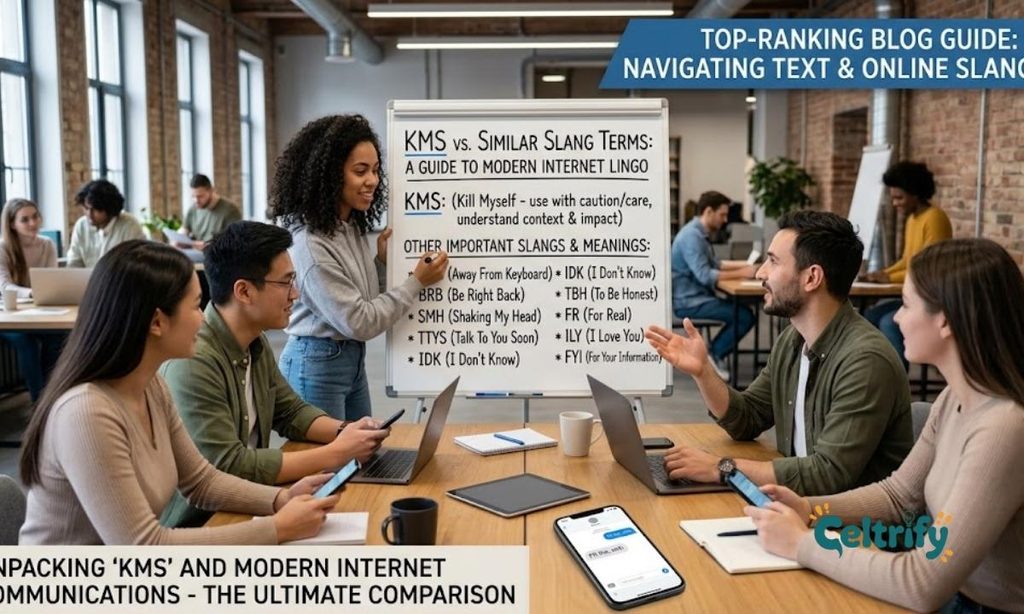
People often mix KMS up with a few lookalike acronyms. Here is how they compare.
| Term | Meaning | Typical Use |
| KMS | Kill myself | Exaggerated reaction to embarrassment or stress |
| KYS | Kill yourself | Often used harshly toward someone else, can be a serious insult |
| SMH | Shaking my head | Disapproval or disbelief |
| FML | F my life | Frustration about a bad situation |
| IDK | I do not know | Uncertainty |
| KMS (technical) | Key Management Service | Used in cloud computing and cybersecurity contexts, unrelated to the slang meaning |
One important distinction worth flagging for 2026: unlike KMS, which is mostly self-directed dark humor, KYS is aimed at someone else and is treated far more seriously by platforms and moderators. Confusing the two can lead to real misunderstandings, so it helps to know which one you are actually reading.
What’s New About KMS Usage in 2026
Slang shifts fast, and a few things have changed in how KMS shows up online this year that older guides on this topic still miss.
Platform moderation has caught up. Major social platforms now use automated detection that flags messages containing self-harm language, including KMS, even when it is clearly used as a joke. This means captions or comments using the term more frequently get a pop-up with mental health resources attached, regardless of intent. If you have noticed a wellbeing check appear after typing KMS, that is why.
It has become more of a caption than a comment. Where KMS used to live mostly in replies and DMs, it now shows up directly inside video captions and on-screen text as a punchline, especially in “relatable” or “cringe compilation” style content.
Workplace and school policies are stricter. More schools and employers now explicitly mention slang like KMS in digital communication guidelines, not because they think students or staff mean it literally, but because written records of the phrase can create liability or require a wellbeing check under duty of care policies.
AI chat filters treat it differently than five years ago. Messaging apps and AI assistants increasingly respond to KMS with a soft check-in message rather than ignoring it, reflecting a broader shift toward taking self-harm adjacent language seriously by default, even in casual slang form.
How to Respond When Someone Sends You KMS
Knowing what to say back matters just as much as knowing what the term means. Here is a simple way to think about it.
- Read the full conversation, not just the message. Look at what came before it and the general mood.
- Match the tone if it is clearly a joke. A laughing response or a relatable comment keeps things light.
- Ask directly if something feels off. A short, sincere question shows you are paying attention.
- Avoid brushing off a repeated pattern. If someone uses this kind of language often and never seems to be joking, that pattern is worth addressing directly rather than letting it become background noise.
- Point them toward support if needed. You do not have to have the perfect words. Encouraging someone to talk to a trusted adult, counselor, or a crisis line is enough.
Should You Use KMS Yourself?
It depends entirely on your audience. Among close friends who already understand your sense of humor, KMS usually lands exactly as intended. In these situations it is harmless texting shorthand.
Avoid it in these settings:
- Professional emails, work chats, or job interviews
- Messages to people you do not know well
- Conversations where someone is already going through something difficult
- School assignments or formal writing
- Any context where tone might not translate clearly
When in doubt, a safer alternative gets the same point across without the risk of being misread. Try phrases like “I’m done,” “so embarrassing,” or “this is too much” if you want to keep the energy without the ambiguity.
Frequently Asked Questions
What does KMS mean from a girl or a guy in texting?
The meaning does not change based on gender. Whether a girl or a guy sends it, KMS almost always functions the same way, as a dramatic reaction to embarrassment, stress, or frustration rather than a literal statement.
Is KMS a bad word to use?
KMS is not a curse word, but it is sensitive language because of its literal meaning. It is best avoided in professional settings, with people you do not know well, or when someone else is visibly struggling.
Is it OK to say KMS to a friend?
Between close friends who understand it as a joke, it is generally fine and common. It becomes a concern only if it is repeated often, used without any humor, or said by someone who seems genuinely low.
What should I do if I am not sure whether someone means it seriously?
Ask directly and kindly. A simple question like “are you being serious right now” gives the other person room to open up if something real is going on, without making assumptions either way.
Is KMS the same as KYS?
No. KMS is typically self-directed dark humor about one’s own bad day, while KYS is aimed at another person and is treated as far more hostile, since it functions as an insult rather than a joke about oneself.
Does KMS always mean kill myself?
In slang contexts, yes, those are the words behind the letters. But in technical and business writing, KMS can also stand for Key Management Service, a completely unrelated term used in cloud security. Context always tells you which one applies.
Final Thoughts
KMS is one of those slang terms that looks alarming on paper but usually carries a much lighter meaning in real conversations. Most of the time, it is a fast, dramatic way to say “that was so embarrassing” or “I am so done with today.” Reading the tone, the relationship, and the pattern around it will tell you almost everything you need to know.
The one rule worth remembering: if the joking tone disappears and the message feels genuinely heavy, treat it seriously. A quick, caring check-in costs nothing and can make a real difference.

John David is a Passionate content creator and digital publisher behind Celtrify.com, dedicated to sharing helpful insights, trending topics, and quality online resources. Focused on delivering engaging, informative, and user-friendly content for readers worldwide.
