

You are scrolling through a group chat or a Discord server and someone drops “OT” before their message. No explanation, no context clue, just two letters sitting there like you are supposed to already know what they mean.
Here is the thing. OT does not mean the same thing everywhere. It changes depending on who is typing it, which app they are using, and what kind of conversation you are actually having. Get it wrong and you might respond to a sports fan like they are talking about their work schedule, or misread a coworker’s message as a casual joke.
This guide breaks down every real meaning of OT in chat, how to use it properly, and where people usually get it wrong.
What Does OT Mean in Chat? (Quick Answer)
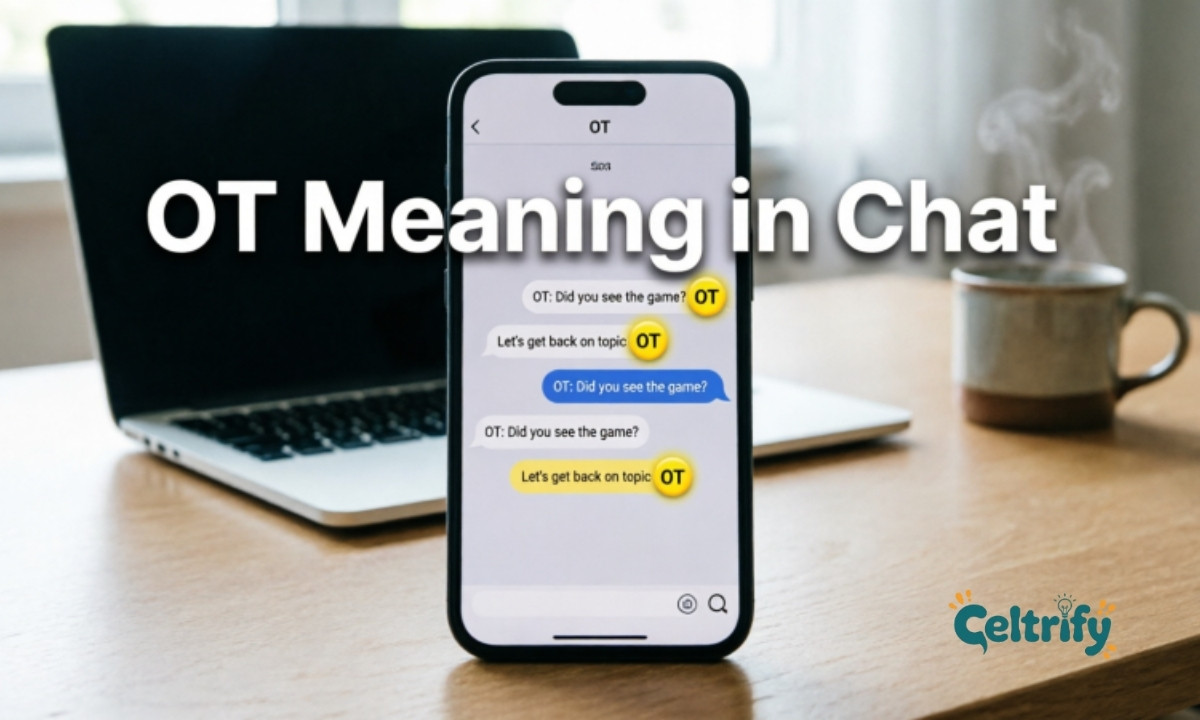
OT in chat most commonly stands for “Off Topic.” It is used when someone wants to say something unrelated to the current conversation, as a quick heads up before they change the subject. Depending on the setting, OT can also mean “Overtime” or “Out of Town.”
That is the short version. The rest of this guide covers when each meaning applies, how to use OT naturally, and the situations where you should avoid it completely.
Where Did OT Come From?
OT is not a new invention from TikTok or Discord. It has been floating around online since the early internet forum days.
Back when message boards were organized by topic, moderators and regular users needed a fast way to flag a comment that did not belong in the thread. Instead of writing “this is not related to what we are discussing,” people shortened it to “OT” and tagged it at the start of their post.
That habit carried over into email threads, then into instant messaging, and eventually into every major chat app people use today. The core idea never changed. OT is a warning label. It tells the reader “heads up, I am about to say something that does not fit here.”
The workplace meaning of OT, which stands for overtime, actually predates the internet slang version by decades. It comes from payroll and labor terminology, referring to hours worked beyond a standard shift. Because both meanings use the same two letters, confusion between them is common, especially when a work related chat and a casual chat blend together, which happens a lot on apps like WhatsApp or Slack.
Don’t Miss : KMS Meaning in Text
The Main Meanings of OT in Chat
Here is a breakdown of the meanings you are most likely to run into, ranked by how often they show up in everyday texting and chatting.
| Meaning | Where You See It | Example |
| Off Topic | Group chats, Discord, forums, social media comments | “OT but did anyone try the new update?” |
| Overtime | Work chats, sports commentary, group texts about jobs | “I’m stuck at work doing OT again” |
| Out of Town | Street slang, regional texting, casual conversations | “Can’t hang tonight, I’m OT until Sunday” |
| Occupational Therapy | Healthcare messages, parenting groups, medical chats | “Her OT appointment got moved to Friday” |
| Old Testament | Religious or Bible study group chats | “We’re covering the OT this semester” |
The first meaning, off topic, dominates casual texting and social platforms. If you see OT in a Discord server, a group chat with friends, or a comment section, it almost always means the person is about to say something unrelated.
The second meaning, overtime, shows up more in work related conversations and sports talk. If a coworker or a sports fan sends OT, they are talking about extra hours or extra playing time, not a topic change.
The remaining meanings are less common but still worth knowing, especially if you are part of a healthcare related group chat or a specific community where those terms are the norm.
OT Meaning on Different Chat Platforms
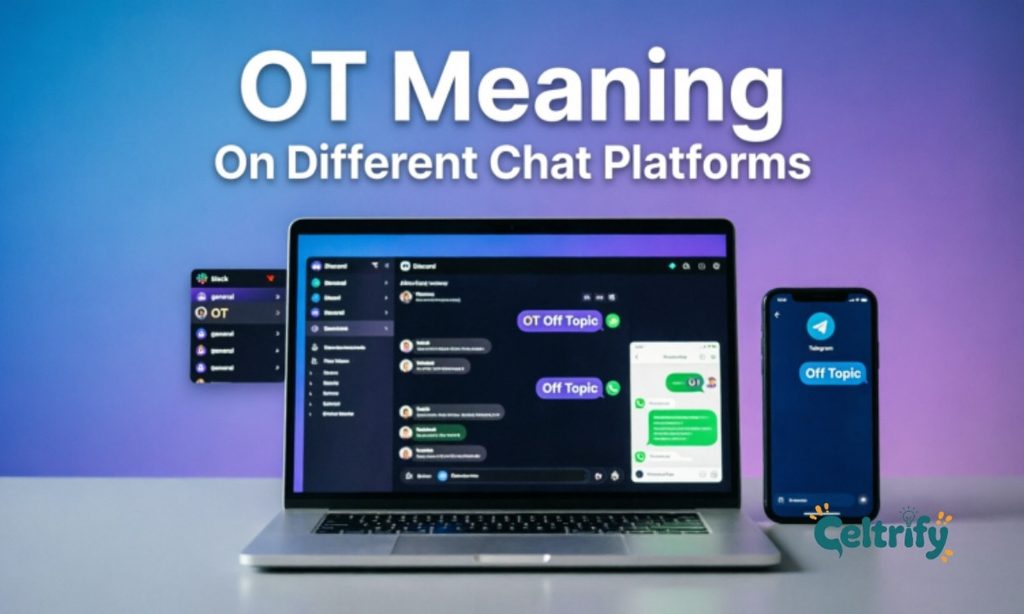
The meaning of OT can shift slightly depending on where you see it. Here is how it typically breaks down across platforms in 2026.
Discord and Gaming Chats
In gaming communities, OT almost always means off topic. Players use it to flag a comment that has nothing to do with the game, match, or strategy being discussed. You will also see it used by moderators reminding users to stay in the right channel.
Example: “OT but this new controller update is actually amazing.”
WhatsApp and iMessage Group Chats
In personal group chats, OT is used casually to switch subjects without derailing the whole conversation. Friends and family use it constantly when a chat has multiple ongoing topics at once.
Example: “OT, but did you see what happened at dinner last night?”
Instagram, TikTok, and Twitter Comments
On social platforms, OT shows up in comment sections when someone wants to bring up something unrelated to the post. It is also used by creators asking followers to keep replies on topic, usually written as “please stay OT” meaning the opposite, on topic, which can confuse people if they are not paying attention.
Workplace Slack or Teams Chats
In professional chat tools, OT usually means overtime. Someone might mention they are pulling OT this week or ask if overtime pay applies to a specific project. Using OT to mean off topic in a formal work chat is less common and can come across as unclear.
Sports Chats and Live Commentary
During live sports discussions, especially basketball, football, or hockey, OT almost always refers to overtime, the extra period played when a game is tied. This meaning has stayed consistent for decades and rarely gets confused with anything else in that context.
Read Slang : IHH Meaning in Text
How to Use OT Correctly
Using OT the right way comes down to reading the room. Here are a few practical examples of how it fits naturally into conversation.
- Starting a message: “OT but has anyone heard back about the trip yet?”
- Softening a topic switch: “OT sorry, random question, but what time does the store close?”
- Acknowledging a derail: “Okay that’s OT, let’s get back to planning the party.”
- Marking your own tangent: “OT rant incoming, ignore me if you’re busy.”
- In a work context (overtime meaning): “I might have to pick up some OT this weekend.”
Notice the pattern. When OT means off topic, it is almost always placed at the beginning of a sentence, acting like a small flag before the actual message. When it means overtime, it usually appears in the middle or end of a sentence, describing hours or time rather than a topic shift.
When You Should Not Use OT
OT is casual by nature, which means there are places where it simply does not belong. Using it in the wrong setting can make a message feel careless or confusing.
- Formal emails and business proposals. Instead of “OT but,” write “On a separate note” or “Unrelated to the above.”
- Serious or emotional conversations. If someone just shared bad news or something personal, jumping in with “OT” right after can come across as dismissive, even if that was not the intention.
- Messages to people unfamiliar with texting slang. Older relatives, new coworkers, or anyone outside of casual digital culture might not know the term at all. Spelling it out avoids confusion.
- Customer service or support chats. These conversations are usually goal focused, and inserting off topic slang can make the exchange feel unprofessional.
- When the meaning is genuinely unclear. If there is any chance the reader might confuse off topic with overtime, especially in a mixed context chat, it is safer to just write the full phrase.
OT vs Similar Chat Abbreviations
OT is part of a bigger family of shorthand terms people use to manage conversation flow. Here is how it compares to a few others you might already know.
| Abbreviation | Meaning | Typical Use |
| OT | Off Topic | Flags an unrelated comment before it’s said |
| BTW | By The Way | Adds an extra thought, usually related |
| ICYMI | In Case You Missed It | Repeats or shares info someone may have missed |
| TLDR | Too Long, Didn’t Read | Summarizes a long message or post |
| AFAIK | As Far As I Know | Signals the speaker isn’t fully certain |
The main difference between OT and the others is intent. BTW usually adds something connected to the current topic, while OT specifically flags a full departure from it. That distinction matters if you want your messages to read naturally instead of sounding like random slang thrown together.
What’s New with OT in 2026
Texting slang shifts constantly, and OT has picked up a few new patterns worth knowing about this year.
AI chat assistants and OT. As more people use AI chatbots and voice assistants for casual conversation, “OT” has started appearing in prompts and chat logs the same way it appears in human to human texting, usually as a way for users to signal they are switching subjects mid conversation. This has made the term even more common outside of traditional social apps.
Voice to text confusion. With voice messaging and speech to text features built into most major apps now, some users have reported OT getting auto transcribed incorrectly, since voice assistants sometimes struggle to catch a two letter acronym spoken quickly. This has led to a small trend of people spelling out “oh tee” in voice notes to avoid the mix up.
Workplace chat culture shift. As hybrid and remote work chat tools blend personal and professional messaging more than ever, the overtime meaning of OT is showing up more frequently inside casual Slack channels, sometimes right next to the off topic meaning in the same thread. This has actually increased confusion slightly, and more companies are encouraging employees to write “overtime” in full inside scheduling related messages to avoid ambiguity.
Gen Alpha usage. Younger users on platforms like Roblox chat and mobile gaming apps have started using OT more loosely, sometimes attaching it to jokes or sarcastic comments rather than genuine topic changes. This is a stylistic shift rather than a meaning change, but it is worth knowing if you are chatting with a younger audience.
Common Mistakes People Make With OT
- Assuming it only means off topic, then misunderstanding a message about work hours or a sports game.
- Using it in professional emails where it can look unclear or unprofessional.
- Overusing it in a single conversation, which can make messages feel choppy and hard to follow.
- Sending it to someone unfamiliar with texting shorthand without any explanation.
- Confusing it with similar looking abbreviations like OTT (over the top) or OTOH (on the other hand).
Frequently Asked Questions
What does OT mean in a text message?
OT most often means “Off Topic” in casual texting. It is used when someone wants to bring up something unrelated to the ongoing conversation. Depending on the context, it can also mean “Overtime,” especially in work or sports related messages.
Is OT rude to use in a chat?
No, OT is generally considered polite. It acts as a heads up that the topic is about to shift, which is more considerate than switching subjects without any warning at all.
Can OT mean something other than off topic or overtime?
Yes. In smaller communities, OT can stand for “Out of Town,” “Occupational Therapy,” or even “Old Testament” in religious discussion groups. The correct meaning almost always depends on the context of the conversation.
How do I know which meaning of OT someone is using?
Look at the setting. If it is a casual group chat or social media comment, it is almost always off topic. If it is a work chat, payroll conversation, or sports discussion, it likely means overtime. Context clues in the sentence usually make the meaning clear within a few words.
Should I use OT in a professional email?
It is best to avoid it. Spell out the full phrase instead, such as “on a separate note” or “unrelated to the topic above,” to keep the message clear and professional.
Is OT the same as saying “random” or “side note”?
They are similar but not identical. OT specifically signals a topic change, while “random” or “side note” can be used for both related and unrelated thoughts. OT is more precise when you want to clearly separate the new comment from the current discussion.
Does OT mean the same thing on every app?
Mostly, but not always. Casual apps like Discord, WhatsApp, and social media comments lean toward off topic. Work tools like Slack or Teams lean toward overtime. Always check the setting before assuming which meaning applies.
Final Thoughts
OT is one of those small pieces of chat shorthand that seems confusing until you see the pattern behind it. In most casual conversations, it means off topic and works as a polite way to signal a subject change. In work chats and sports talk, it usually means overtime. The context of the conversation almost always tells you which one applies.
Once you know the difference, OT stops being confusing and becomes just another normal part of how people chat online. Use it when it fits, skip it in formal settings, and you will never have to second guess what someone meant by those two letters again.

John David is a Passionate content creator and digital publisher behind Celtrify.com, dedicated to sharing helpful insights, trending topics, and quality online resources. Focused on delivering engaging, informative, and user-friendly content for readers worldwide.
