

You open your phone. A message is sitting there from three hours ago. You finally reply and the other person types back one word first: “SFLR.” No context, no explanation, just four letters sitting at the top of their message.
If you are not chronically online, this can feel like a secret code. Is it an apology? A brush off? Some kind of inside joke you missed the memo on? You are not alone in wondering this, and honestly, the answer is simpler than it looks once someone breaks it down for you.
This guide covers exactly what SFLR means, where it came from, how people actually use it in 2026, and when you should avoid typing it altogether.
What Does SFLR Mean?
SFLR stands for “Sorry For Late Reply.” It is a texting abbreviation people use when they respond to a message after a noticeable delay, as a quick way to acknowledge the gap before continuing the conversation. It is common in DMs, group chats, and messaging apps like WhatsApp, Instagram, and TikTok.
That is the short version. Now let’s get into the details, because there is more nuance to this little acronym than most articles give it credit for.
Read Meaning : DTM Meaning in Text
Where SFLR Comes From
SFLR is not a brand new term, even though it feels like it exploded in popularity recently. It has floated around texting culture for over a decade, sitting quietly next to older abbreviations like LOL, BRB, and IDK. What changed is the volume of messaging happening today. With DMs, group chats, work Slack pings, and social media comments all competing for a response, people needed a fast way to flag a delay without writing out a full sentence every time.
The acronym works the same way as its cousin SLR, which stands for “Sorry, Late Reply.” Some people use the two interchangeably, though SFLR is the more commonly typed version across Gen Z and younger millennial texting circles.
Also Read : KMS Meaning in Text
How People Use SFLR in Real Conversations
SFLR almost always shows up at the very start of a reply. It rarely gets buried in the middle of a sentence or tacked onto the end. Think of it as a conversational reset button, something you tap before diving back into the actual topic.
Here are a few realistic examples of SFLR in action:
- “SFLR, my phone died on the train.”
- “SFLR!! Work has been insane this week.”
- “Hey, SFLR, just saw this now.”
- “SFLR any dinner left for me?”
Notice the pattern. It almost always comes first, often followed by a short reason or straight into the next thought. People rarely explain themselves at length after using it. That is kind of the point, it saves time.
Is SFLR Only Used in Texting?
No. While texting is where it started, SFLR now shows up in Instagram DMs, TikTok comment replies, Discord servers, and WhatsApp chats just as often. Wherever casual messaging happens, this abbreviation tends to follow.
Read Slang : OT Meaning in Chat
SFLR vs Similar Texting Abbreviations
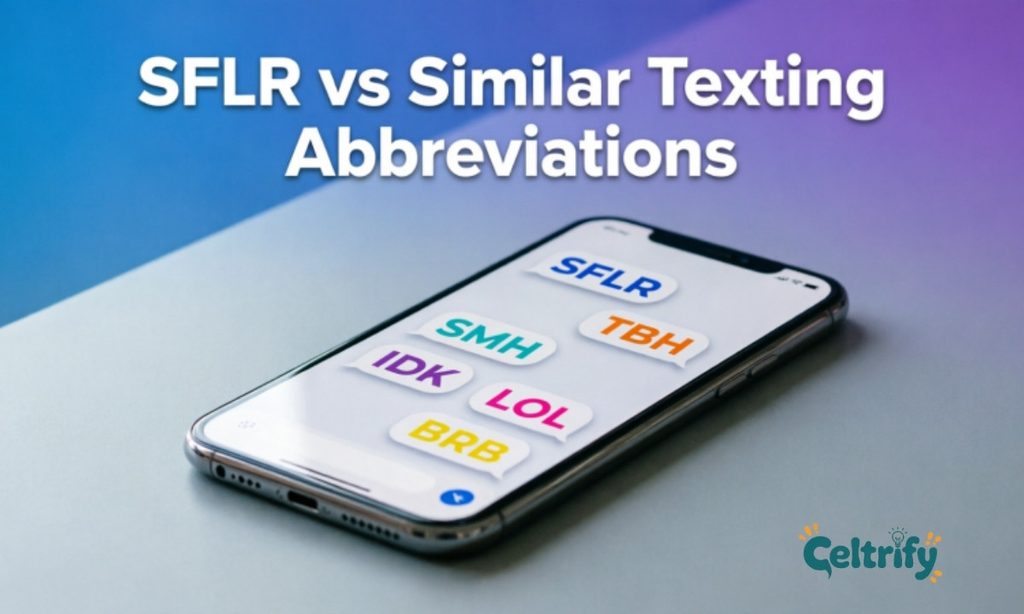
Since there are quite a few “sorry I’m late” style abbreviations floating around, here is a quick comparison table so you know exactly which one to use and when.
| Abbreviation | Full Meaning | Typical Use Case |
| SFLR | Sorry For Late Reply | Casual texting, DMs, group chats |
| SLR | Sorry, Late Reply | Nearly identical to SFLR, less common |
| SFLY | Sorry For Late Reply (variant spelling) | Rare, seen mostly in younger texting groups |
| ILY | I Love You | Unrelated, but often confused visually |
| BRB | Be Right Back | Used before stepping away, not after returning late |
| WYD | What You Doing | Opening a new conversation, not apologizing |
The table makes it clear that SFLR sits in its own small category. It is not interchangeable with things like BRB or WYD, since those serve completely different conversational purposes.
Why People Use SFLR Instead of a Real Apology
This is the part most articles skip over, and it is honestly the most interesting piece of the puzzle.
SFLR is rarely a genuine, heartfelt apology. Most of the time, it functions more like a social placeholder. It tells the other person “I noticed the gap, I am acknowledging it, let’s move on” without requiring either person to dwell on it. It is efficient, low effort, and socially smooth.
Compare that to typing out “I am so sorry I did not get back to you sooner, things got really hectic on my end.” That takes longer to write and puts more emotional weight on the moment. SFLR strips that weight away. It is casual by design.
This is also why SFLR tends to appear more in relaxed, low stakes conversations. Friends catching up, casual flirting, group chat banter. It is not typically the tool people reach for when something serious is on the line.
When You Should Use SFLR
SFLR fits naturally into certain situations. Here is where it tends to work well:
- Replying to a friend after being busy with work, school, or errands
- Getting back to a casual DM after being away from your phone
- Responding late in a group chat where the delay is not a big deal
- Texting someone you have an easygoing, informal relationship with
In these cases, SFLR does exactly what it is supposed to do. It smooths over a small gap without making things awkward or formal.
When You Should Avoid Using SFLR
This is where a lot of people trip up, and it is worth paying close attention to.
- Formal or professional contexts. Do not use SFLR in emails, job applications, client messages, or anything tied to work. It reads as unprofessional. A phrase like “apologies for the delayed response” works far better there.
- Messaging someone unfamiliar with slang. If you are texting a parent, grandparent, teacher, or older relative who might not recognize internet abbreviations, spell it out instead. Otherwise it can come across as confusing or even like a typo.
- Serious or emotional conversations. If someone shared bad news, asked for urgent help, or is clearly upset, SFLR can come across as dismissive. In these moments, a real sentence carries more weight and shows you actually care about the delay.
- During an active disagreement. If you are mid argument with someone, tossing in SFLR can make it look like you are not taking the situation seriously, which can make tension worse instead of better.
- Public posts or comments. Nobody is timing how fast you reply to a random comment on a public post. Save SFLR for one on one conversations where the delay was actually noticed.
What Happens If You Use SFLR in the Wrong Situation?
Using SFLR in a serious or professional context usually comes across as careless or immature, even if that was not your intention. The person on the other end may read it as you brushing off something important. When in doubt, default to a full sentence instead of the abbreviation.
SFLR in 2026: What Has Changed
Texting slang moves fast, and a few shifts around SFLR are worth flagging for anyone catching up in 2026.
It has become more visual than literal. People increasingly pair SFLR with emojis, like a skull emoji or a laughing face, turning it into more of a self aware joke about being a bad texter rather than a sincere apology. The tone has shifted from “genuinely sorry” to “we both know I take forever to reply and that is just how it is.”
AI powered messaging suggestions are picking it up. Several messaging apps now include smart reply suggestions, and SFLR style phrases are starting to appear as auto suggested openers when a conversation gap is detected by the app. This is pushing the term into even wider use among people who might not have picked it up organically.
It is spreading beyond younger users. What started as a Gen Z and younger millennial habit is now creeping into wider use as messaging apps blur generational lines. More people in their thirties and forties are picking it up simply from seeing it used around them, even if they are not fully sure what it stands for yet.
Voice and video messaging has not replaced it. Despite the rise of voice notes and short video replies on platforms like Instagram and WhatsApp, SFLR remains firmly a text based habit. It has not really carried over into spoken messages, since saying “sorry for late reply” out loud just sounds odd compared to typing it.
How to Reply When Someone Sends You SFLR
If someone opens a message with SFLR, you do not need to overthink your response. A few easy options:
- “No worries at all!”
- “All good, life happens.”
- “Haha same, I’m always late replying too.”
- Simply continue the conversation without addressing it directly.
Making a big deal out of someone’s SFLR usually feels unnecessary. The whole point of the abbreviation is to keep things light, so matching that energy in your reply keeps the conversation flowing naturally.
Quick Reference Summary
| Question | Answer |
| What does SFLR mean? | Sorry For Late Reply |
| Where is it used? | Texting, DMs, WhatsApp, Instagram, TikTok comments |
| Is it formal? | No, strictly casual |
| Should you use it at work? | No, avoid it in professional settings |
| Is it a sincere apology? | Usually not, more of a social smoothing phrase |
| Similar terms? | SLR, SFLY |
Conclusion
SFLR simply means “Sorry For Late Reply.” It is a casual, low effort way to acknowledge a delay in texting without making a big deal out of it. Use it with friends and in relaxed conversations, but skip it in professional messages, serious conversations, or when talking to someone who might not recognize the slang.
Once you know what it stands for, those four letters stop being confusing and start being just another small piece of how people text today.

John David is a Passionate content creator and digital publisher behind Celtrify.com, dedicated to sharing helpful insights, trending topics, and quality online resources. Focused on delivering engaging, informative, and user-friendly content for readers worldwide.
